127.1 Inbound JMS Adpater
Learning Objectives:- This unit describes:-
- How to develop an Inbound interface for an inbound JMS Adapter?
Introduction:
In this tutorial, we will learn How to develop an Inbound interface for an inbound JMS Adapter. This functionality is available from v2.47 onwards. In simple words, SKYVVA JMS Adapter, users can easily push data to a topic or queue and perform operations on a schedule or process urgent messages immediately. You can apply priority processing to specific records in queues and topics. Publish data means Inbound JMS Adapter. We need an Inbound JMS Adapter when we want data into salesforce. So now we are going to check the use cases for the Inbound JMS Adapter i.e, for Publisher. To configure, firstly we need to learn and follow some steps: How to configure New Agent Control Board? To configure a new agent control board follow the given steps: Step1: Create Integration. => Go custom Link => Clickon agent control board.
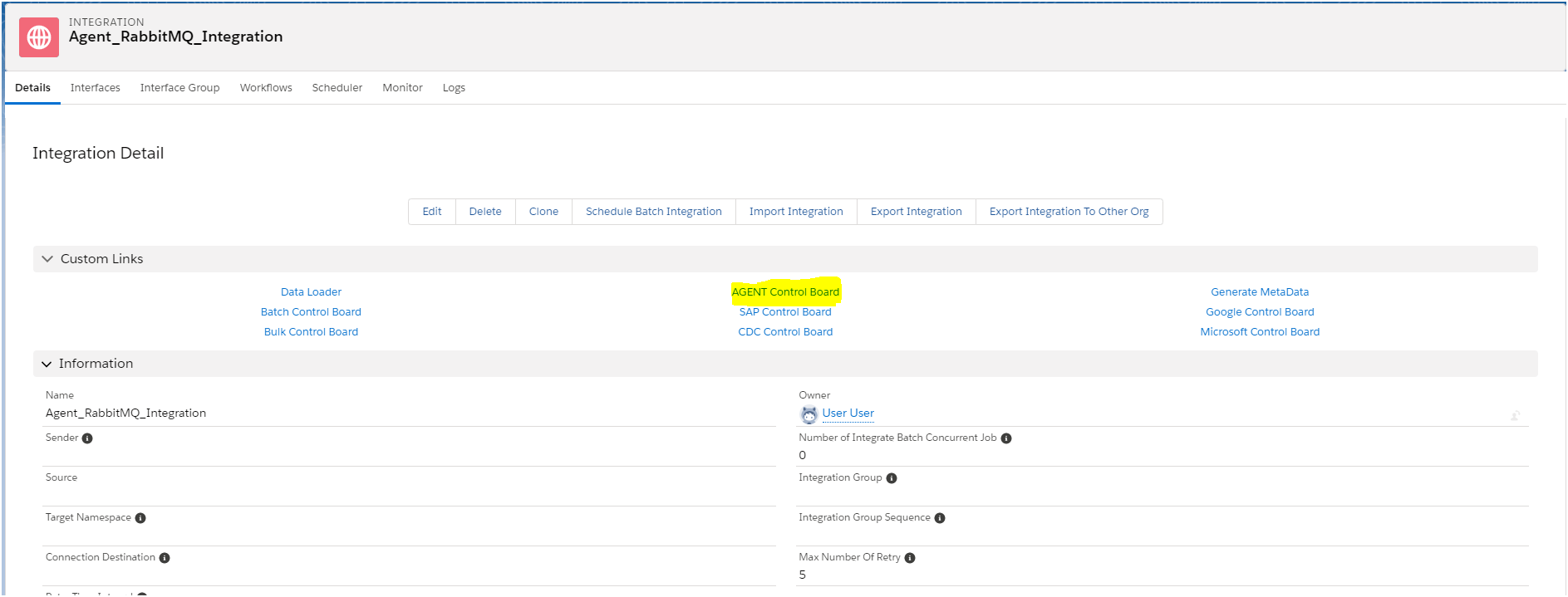
Step2: The custom link (Agent control board) Navigate to the Dashboard of the new agent control board.
- Create your own " Connection destination file or you can select the existing one". Then click on the Ping connection button. Make sure the server is running.
- Select type "Agent JMS" Adapter.

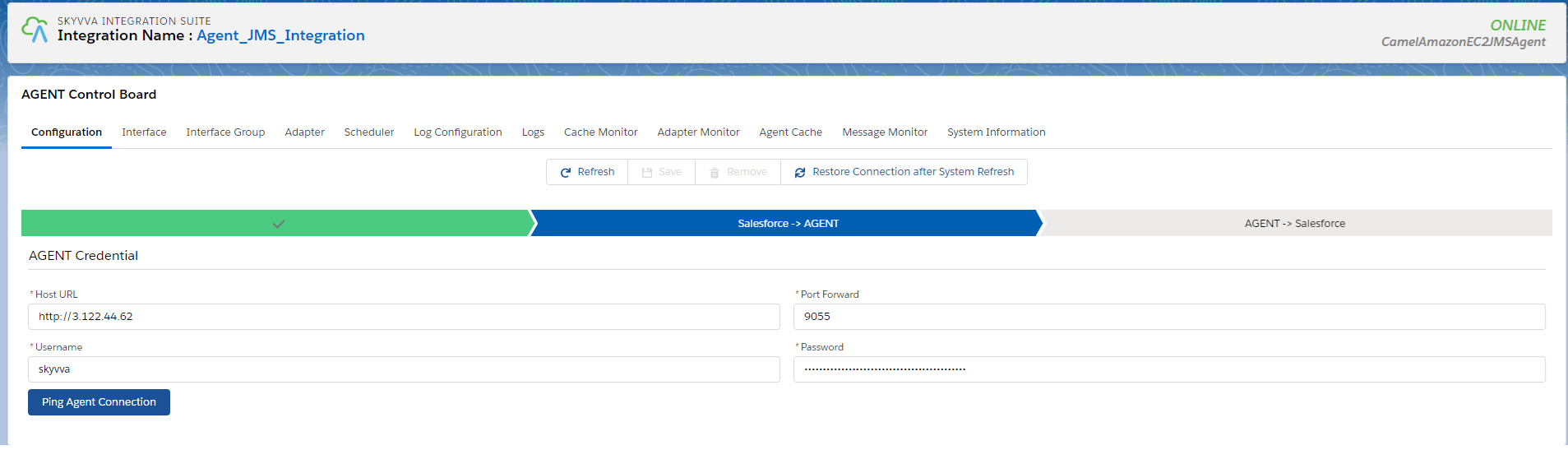
Step3: Fill in all the fields of the agent credential and click on the Ping Agent Connection button.
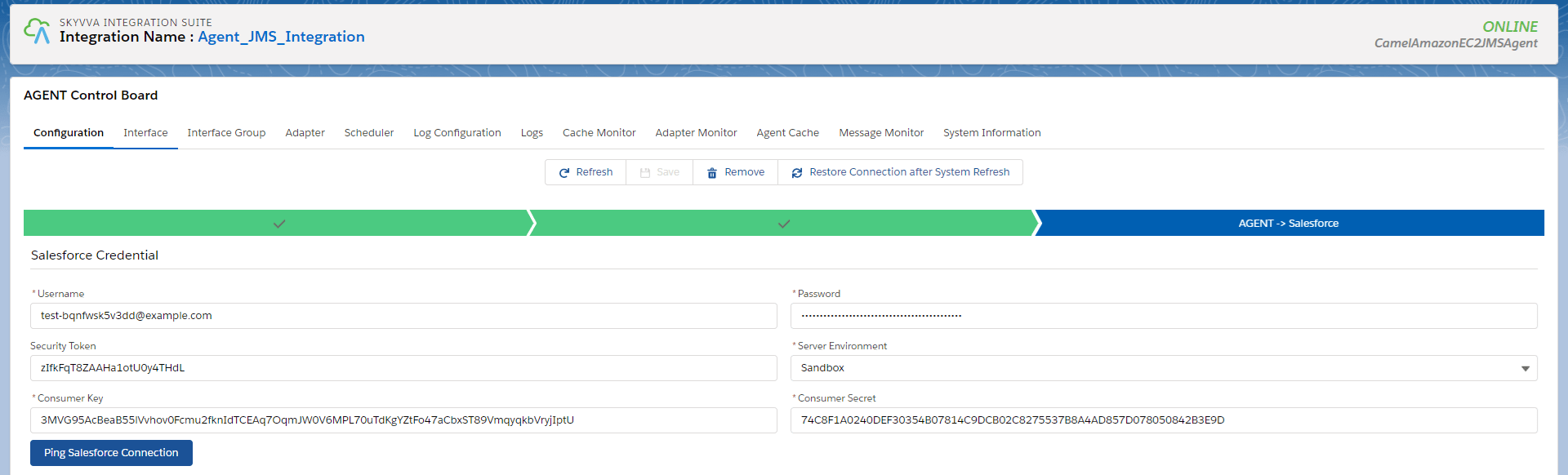
Step4: Fill in all the fields of the Salesforce credential and click on the Ping Salesforce Connection button.
How to check caching New Agent Control Board: To check caching first you should create all the data. Integration:
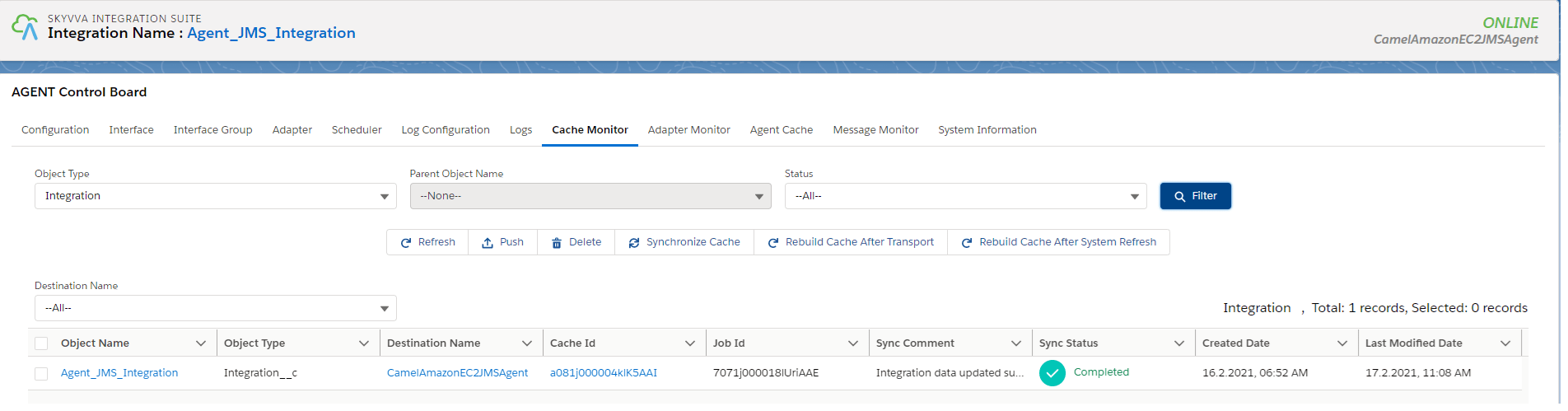
Interface Group:
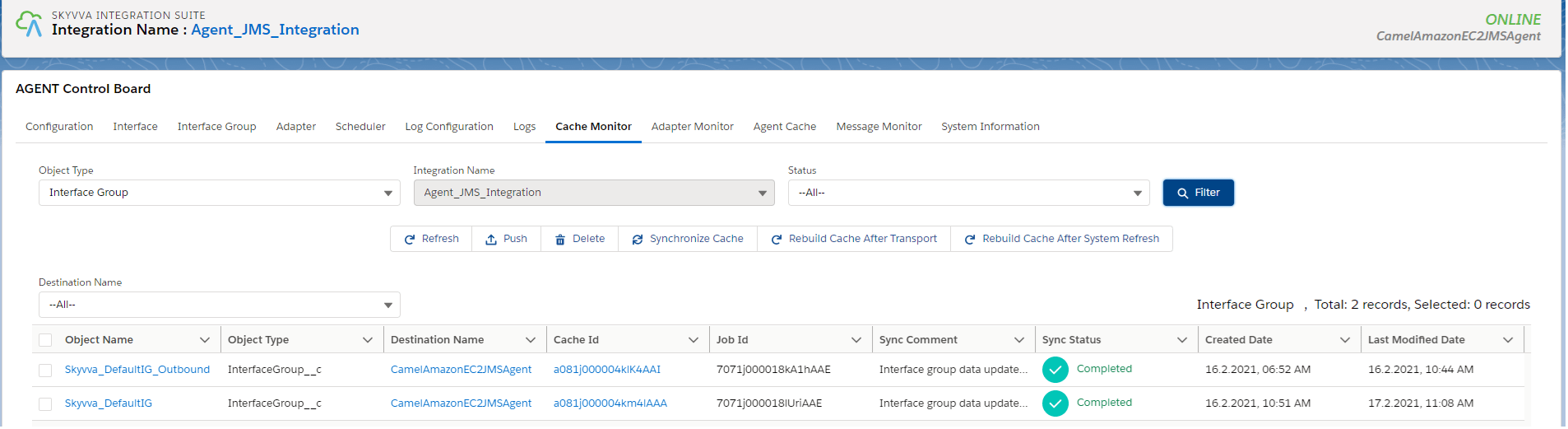
Interface:

Mapping:

Use Cases:
- Using file type CSV
- Using file type XML
- Using file type JSON
1. File type CSV:
Pre-requisite:
- Create Integration.
- Create Metadata Provider, IStructure Repository, and Create Flat Message Type.
- Metadata Provider: Agent_ActiveMQ_RabbitMQ_JMS_Metadata
- IStructure Repository: CSV_Repo
- Message Type: MyAccount

Steps:
Step1:To Create Agent JMS CSV Inbound Adapter:
- Go to Integration (Example: Agent_JMS_Integration)
- Click on link AGENT Control Board.
- Go to Adapter Tab and Click on New Button.
Configure Agent JMS CSV Inbound Adapter: You need to enter adapter properties base on system requirement and Select Connection Destination (Example: CamelAmazonEC2JMSAgent). No need to add a username and password because it is the default admin on the agent side. Here I’m testing Agent JMS adapter with MQ Product Type = ActiveMQ also you can test Agent JMS adapter with other systems like you need to configure adapter property base on your system configuration. Example: host, port, etc.

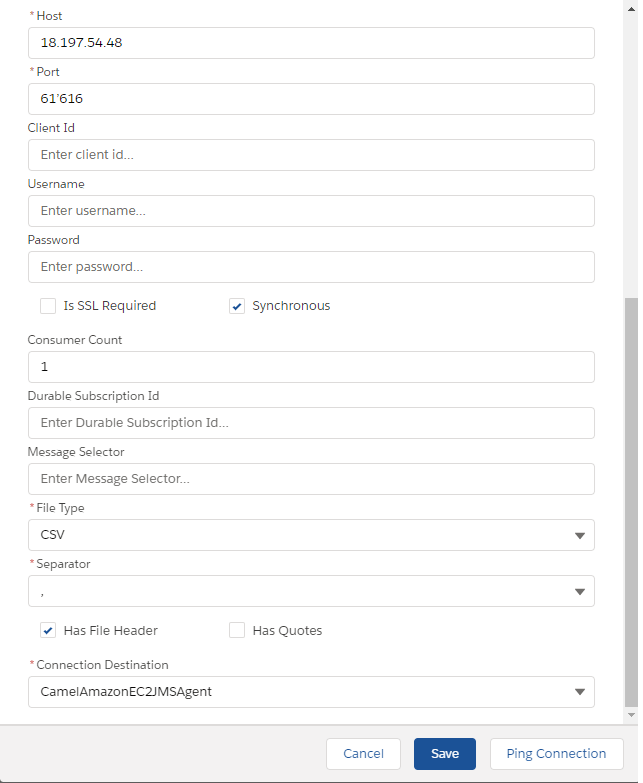
Step2: Create Integration and Inbound Interface:
- Integration: Agent_JMS_Integration
- Inbound Interface: Camel Agent JMS CSV IB
- Metadata: Agent_ActiveMQ_RabbitMQ_JMS_Metadata
- Repository: CSV_Repo
- MessageType: MyAccount
- Adapter: Camel Agent JMS CSV IB
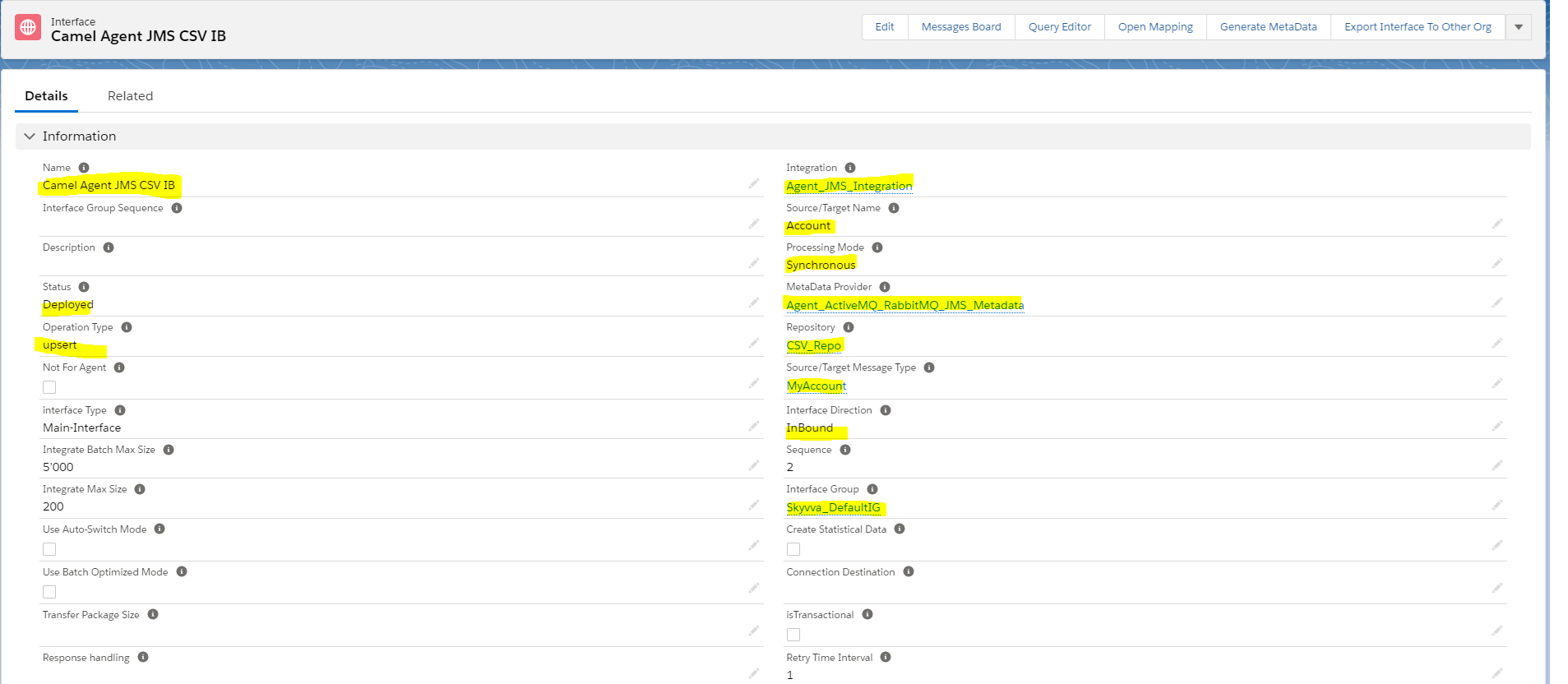

Step3: Mapping

[su_box title="Note" box_color="#2a8af0" title_color="#000000"] No need to execute any callout logic because you are sending data ActiveMQ server to the Salesforce side. You just need to start route example: Go to adapter tab => All adapter will display in the list view and you need to click on the start button and your route will be started automatically or you can change adapter status inactive to active and it also starts route automatically. If you will make any changes inside the adapter property then you need to stop the route and start again after your changes will reflect server.[/su_box]

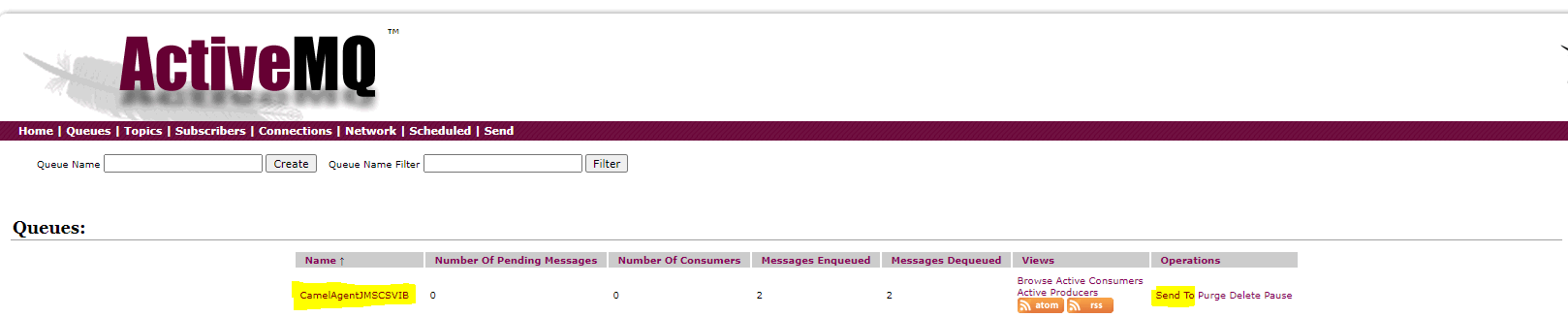
Step4: Send Data ActiveMQ Server to Salesforce side: [su_box title="Note" box_color="#2a8af0" title_color="#000000"] When you start the route then ActiveMQ will automatically generate a queue with a Destination name like CamelAgentJMSCSVIB or if it will not create a queue then you can create by manually using ActiveMQ window and click on Send to link on the right-hand side.[/su_box]
- Check CSV Data on ActiveMQ Server:
Open Link: http://18.197.54.48:8161/admin/browse.jsp Username: admin Password: admin **Go to queue. Click on queue example: CamelAgentJMSCSVIB**.
- The next screen is used to send CSV data to the Salesforce server.
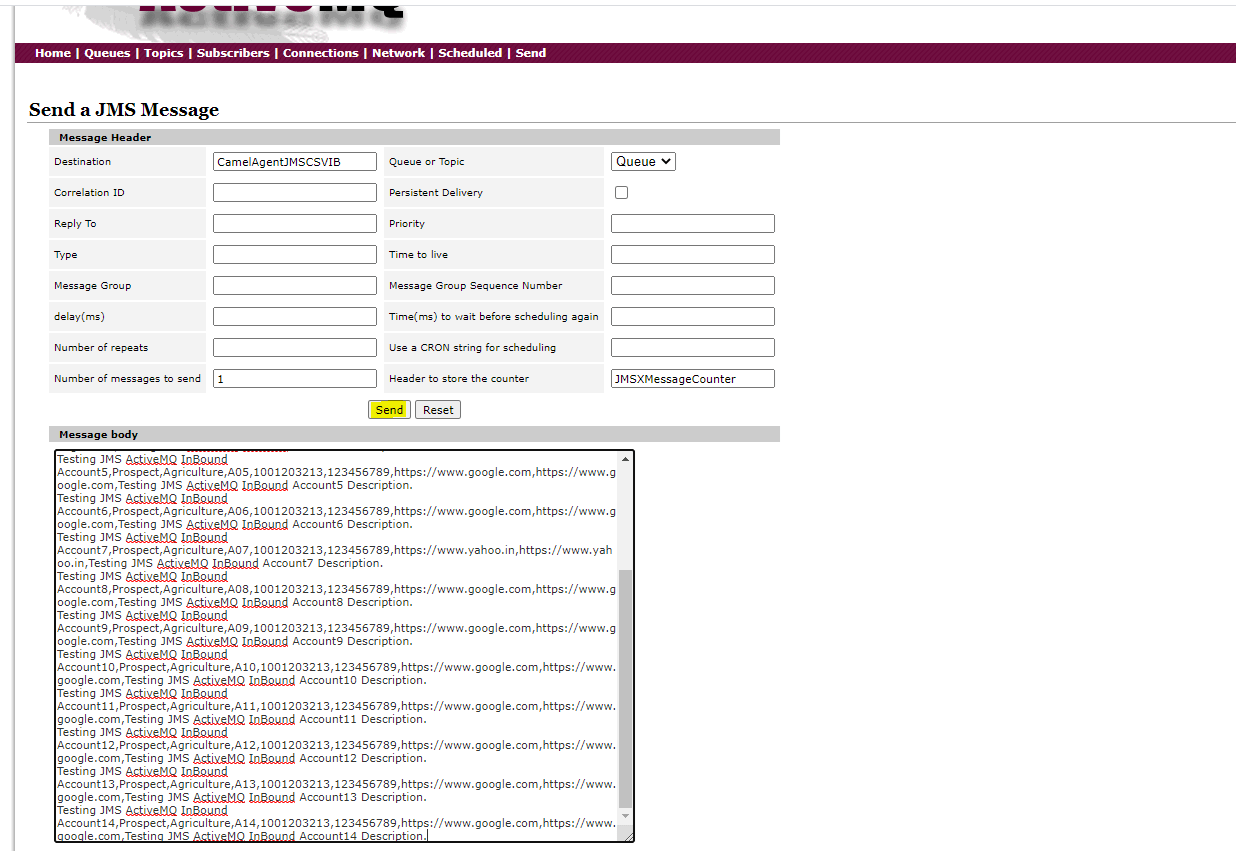
- Click on the send button and check the result on message monitoring.
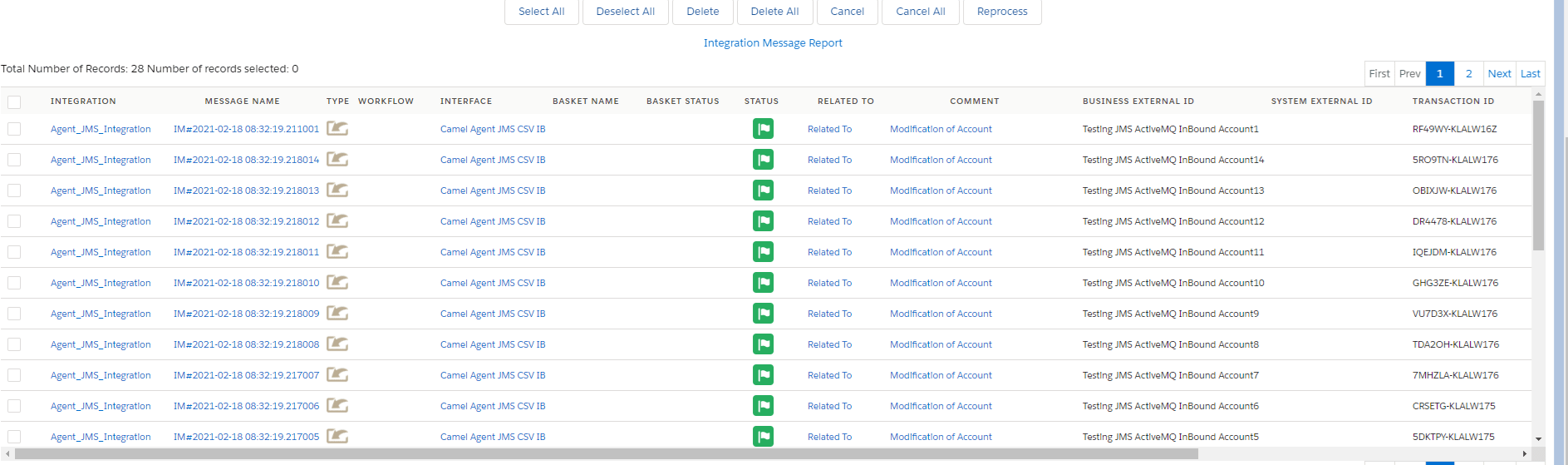
Step4: Message Monitoring
2. File type XML:
Pre-requisite:
- Create Integration.
- Create Metadata Provider, IStructure Repository, and Create Flat Message Type.
- Metadata Provider: Agent_ActiveMQ_RabbitMQ_JMS_Metadata
- IStructure Repository: CSV_Repo
- Message Type: MyAccount
Steps:
Step1:To Create Agent JMS CSV Inbound Adapter:
- Go to Integration (Example: Agent_JMS_Integration)
- Click on link AGENT Control Board.
- Go to Adapter Tab and Click on New Button.
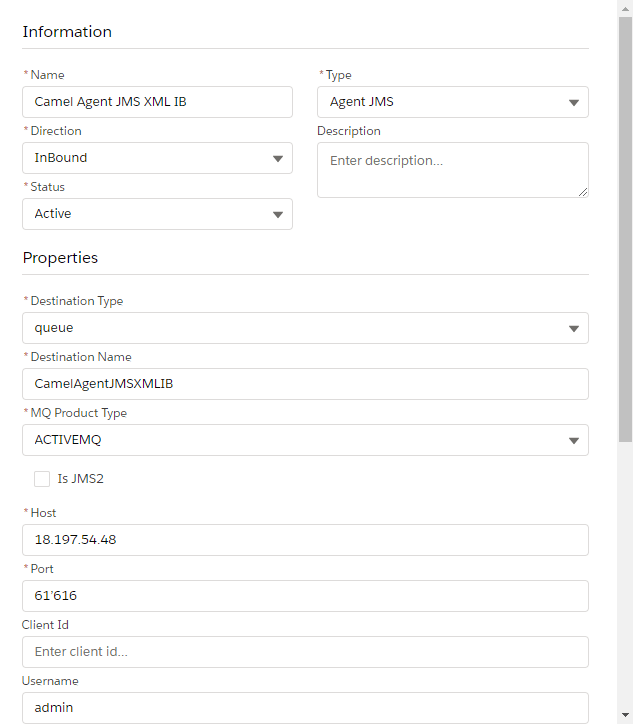
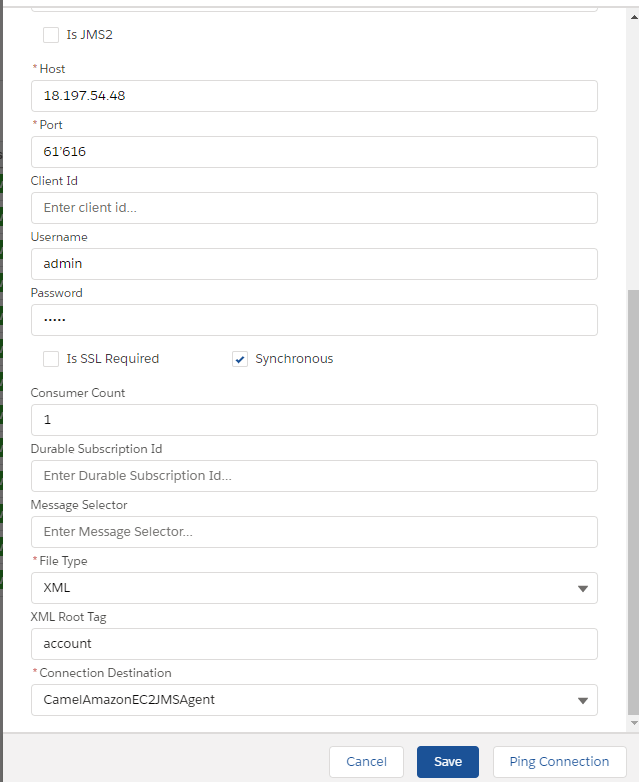
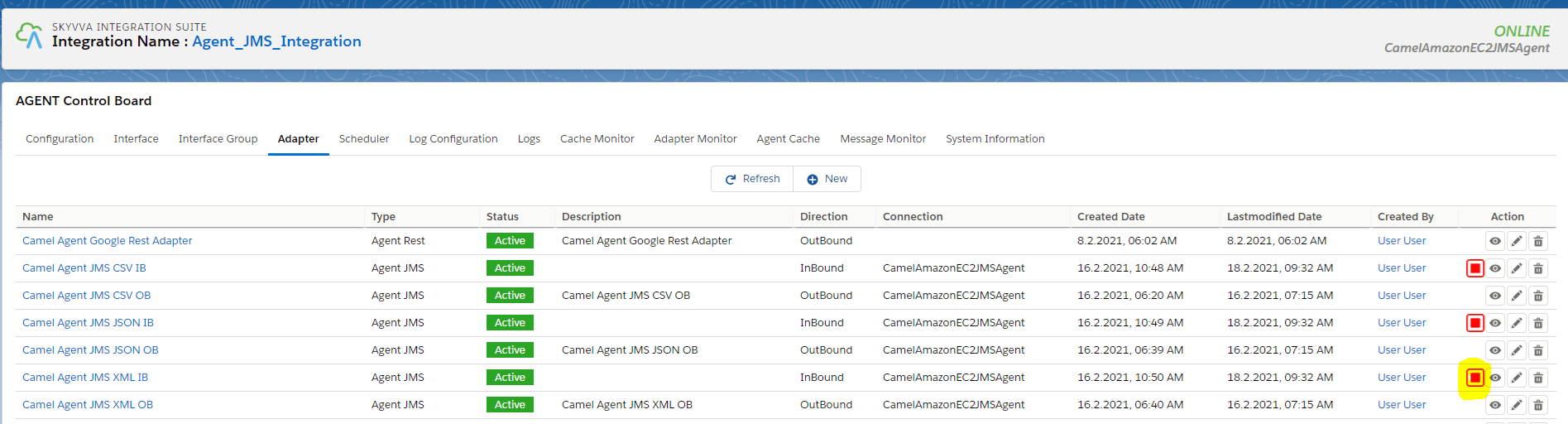
Start Route:
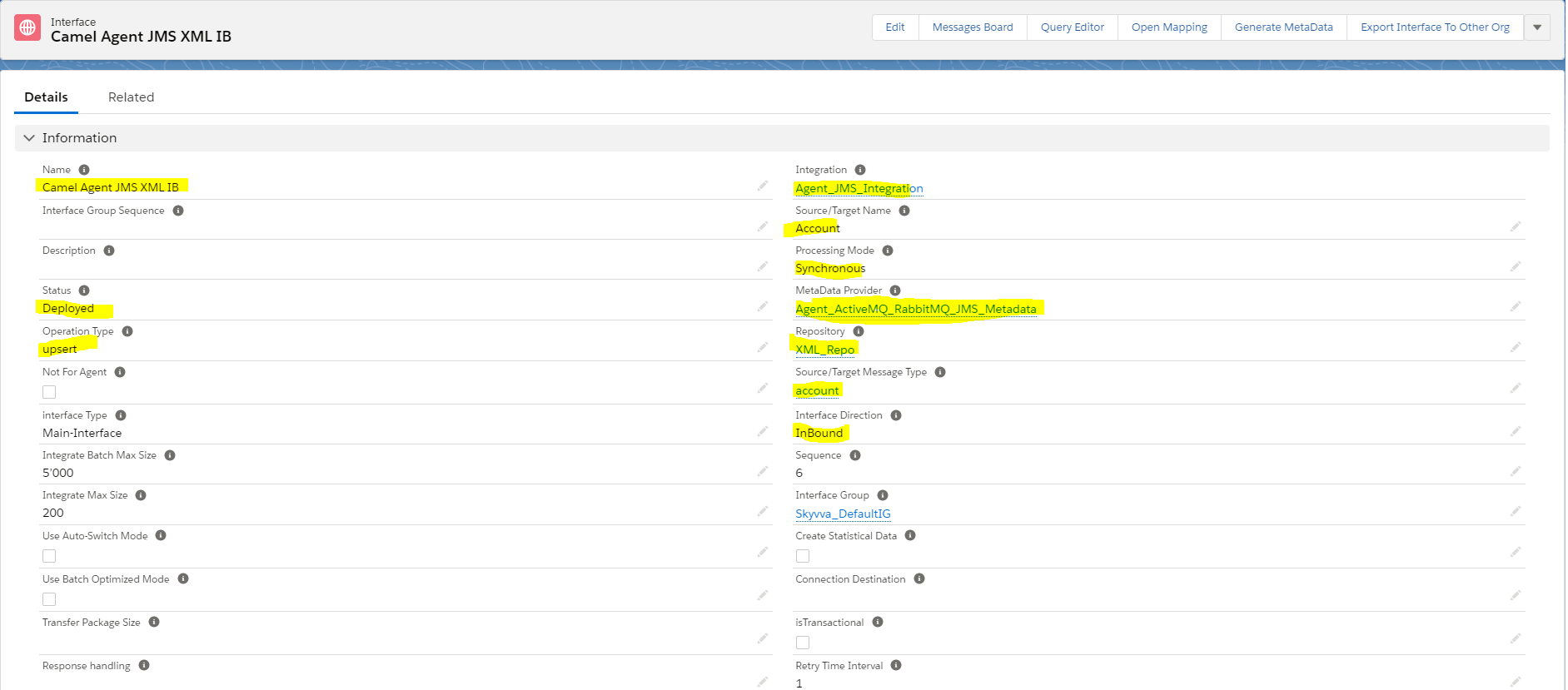
Step2: Create Integration and Inbound Interface:
- Integration: Agent_JMS_Integration
- Inbound Interface: Camel Agent JMS XML IB
- Metadata: Agent_ActiveMQ_RabbitMQ_JMS_Metadata
- Repository: XML_Repo
- MessageType: account
- Adapter: Camel Agent JMS XML IB
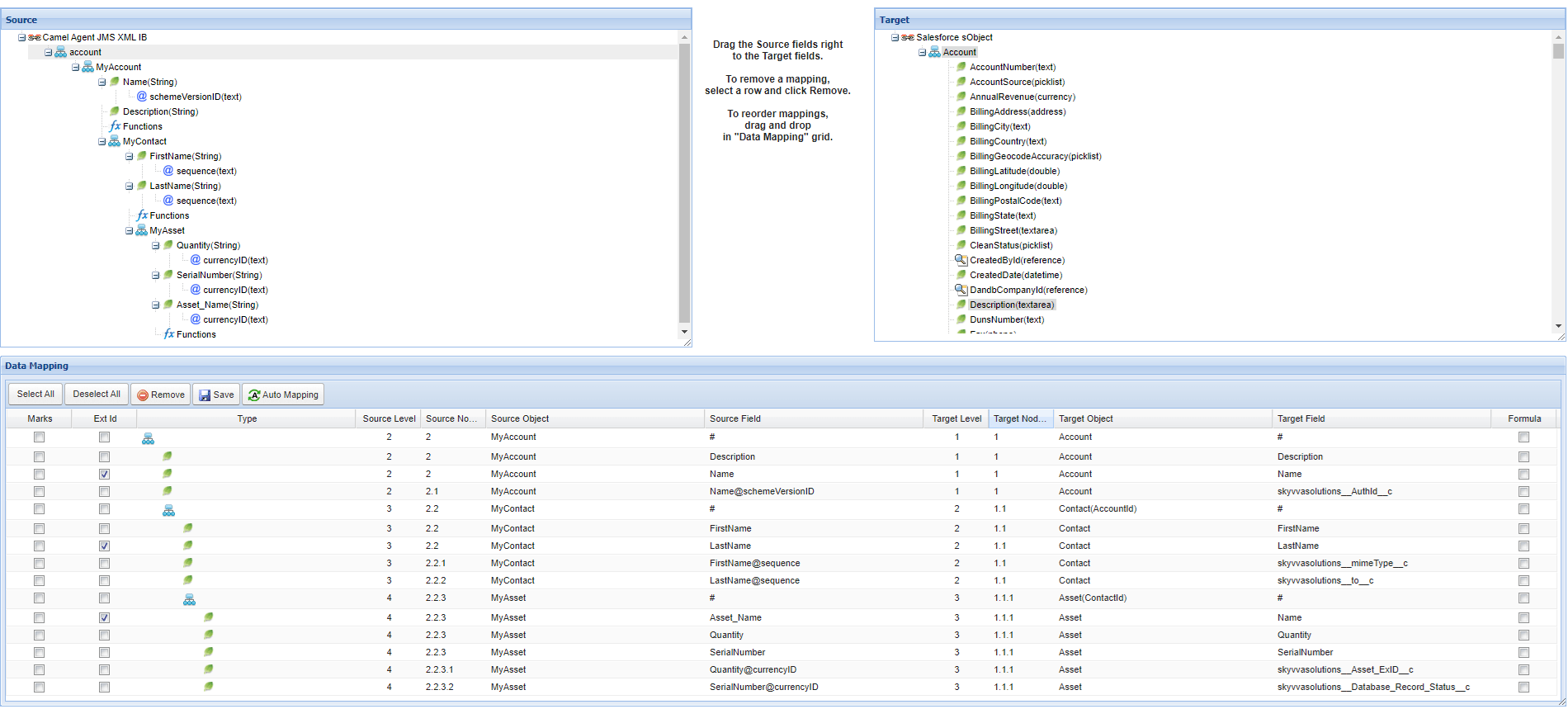
Step3: Mapping
Step4: Send Data ActiveMQ Server to Salesforce side: [su_box title="Note" box_color="#2a8af0" title_color="#000000"] When you start the route then ActiveMQ will automatically generate a queue with a Destination name like CamelAgentJMSXMLIB or if it will not create a queue then you can create by manually using ActiveMQ window and click on Send to link on the right-hand side.[/su_box]
- Check XML Data on ActiveMQ Server:
Open Link: http://18.197.54.48:8161/admin/browse.jsp Username: admin Password: admin **Go to queue. Click on queue example: CamelAgentJMSXMLIB**.
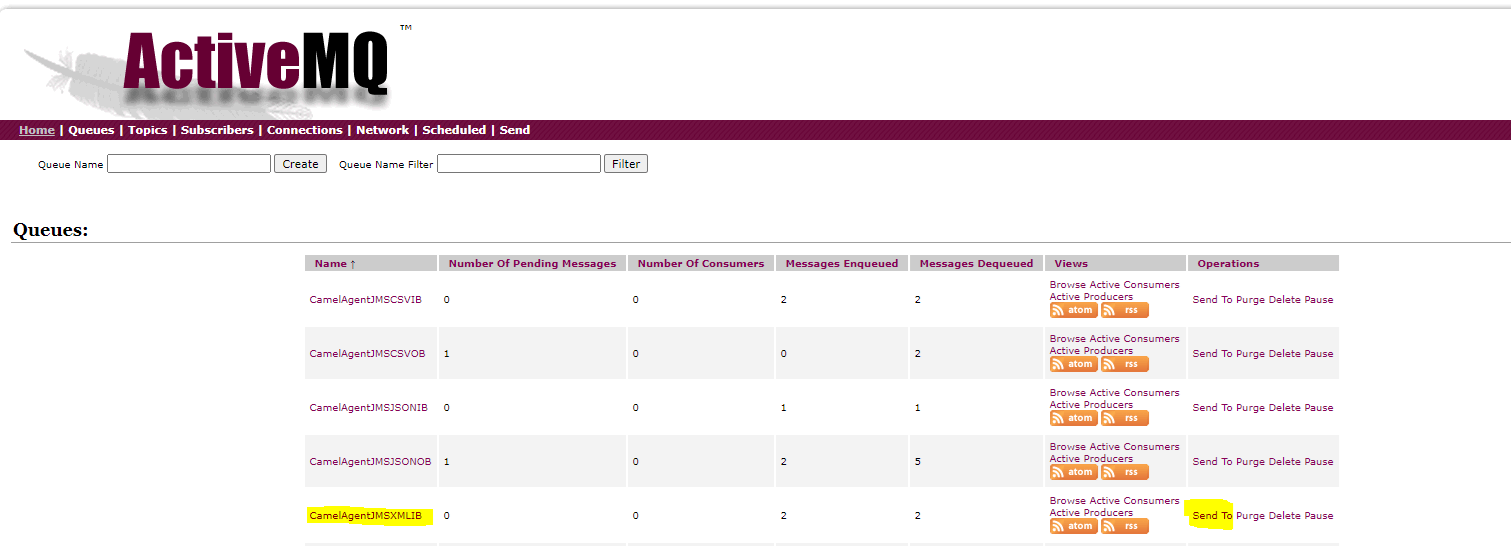
- The next screen is used to send CSV data to the Salesforce server.

Step5: Message Monitoring

3. File type JSON:
Pre-requisite:
- Create Integration.
- Create Metadata Provider, IStructure Repository, and Create Flat Message Type.
- Metadata Provider: Agent_ActiveMQ_RabbitMQ_JMS_Metadata
- IStructure Repository: JSON_Inbound_Repo
- Message Type: rootNode
Steps:
Step1:To Create Agent JMS JSON Inbound Adapter:
- Go to Integration (Example: Agent_JMS_Integration)
- Click on link AGENT Control Board.
- Go to Adapter Tab and Click on New Button.


Start Route:
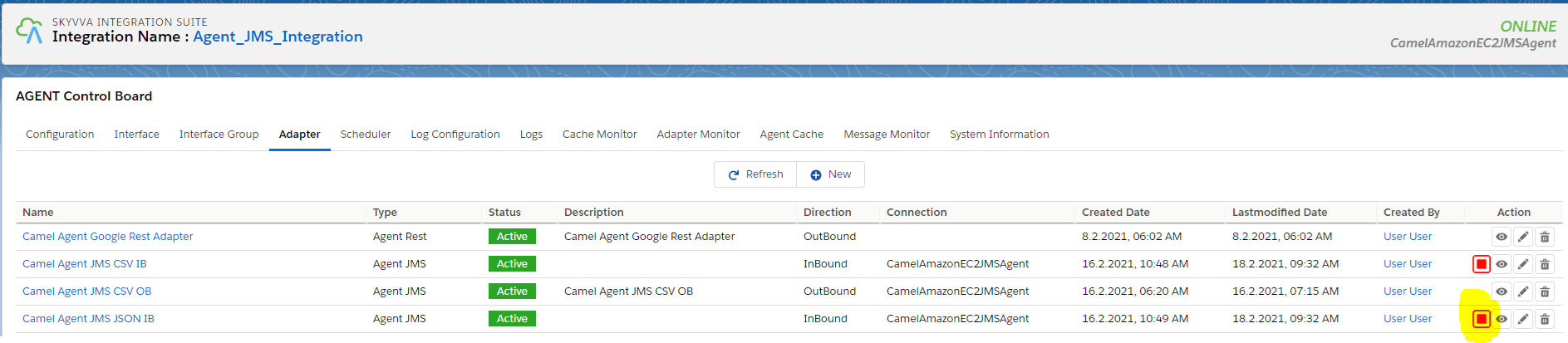
Step2: Create Integration and Inbound Interface:
- Integration: Agent_JMS_Integration
- Inbound Interface: Camel Agent JMS JSON IB
- Metadata: Agent_ActiveMQ_RabbitMQ_JMS_Metadata
- Repository: JSON_Inbound_Repo
- MessageType: rootNode
- Adapter: Camel Agent JMS JSON IB

Step3: Mapping

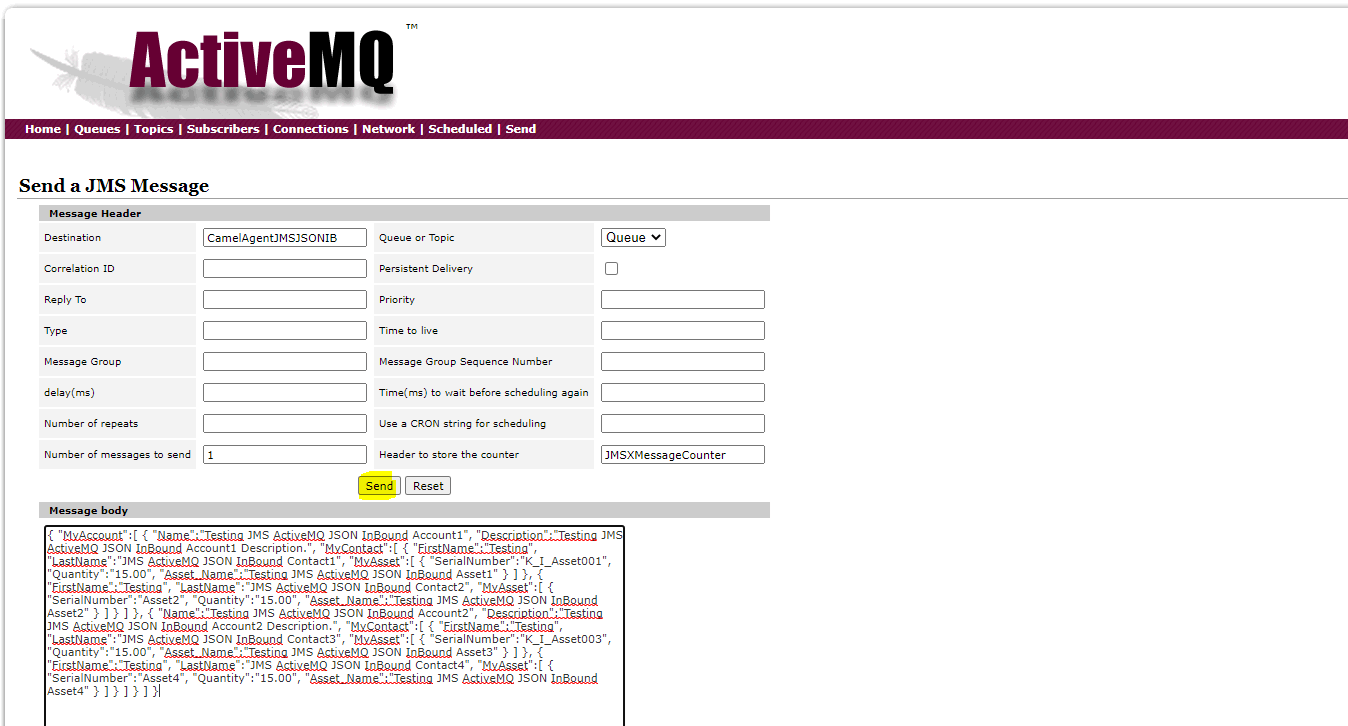
Step4: Send Data ActiveMQ Server to Salesforce side: [su_box title="Note" box_color="#2a8af0" title_color="#000000"] When you start the route then ActiveMQ will automatically generate a queue with a Destination name like CamelAgentJMSJSONIB or if it will not create a queue then you can create by manually using ActiveMQ window and click on Send to link on the right-hand side.[/su_box]
- Check JSON Data on ActiveMQ Server:
Open Link: http://18.197.54.48:8161/admin/browse.jsp Username: admin Password: admin **Go to queue. Click on queue example: CamelAgentJMSJSONIB**.

- The next screen is used to send CSV data to the Salesforce server.
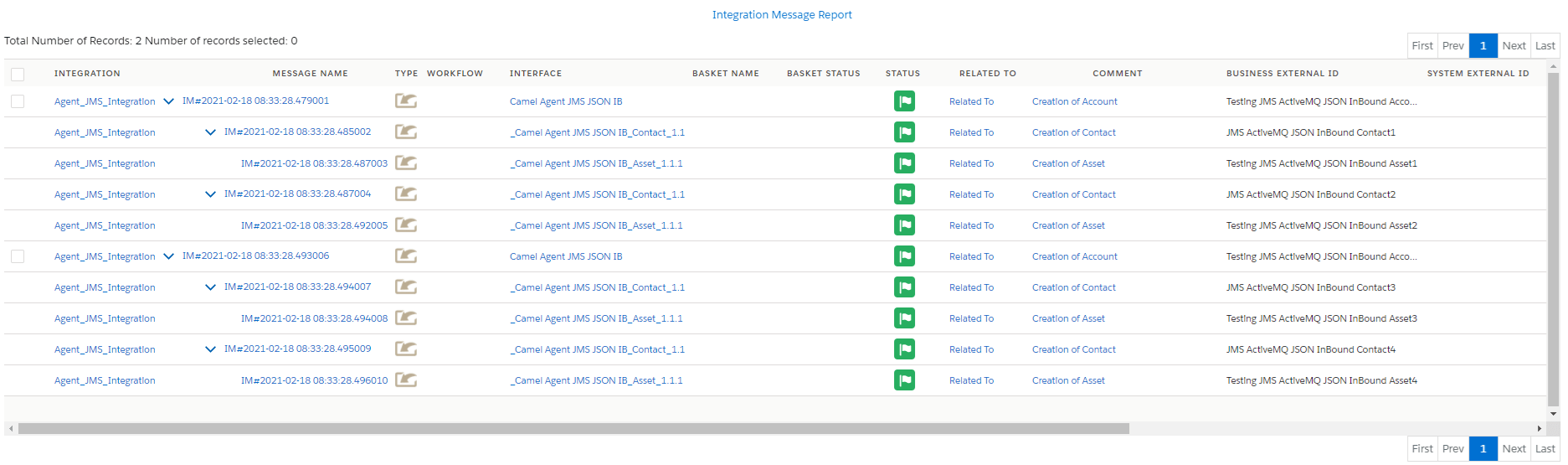
Step5: Message Monitoring